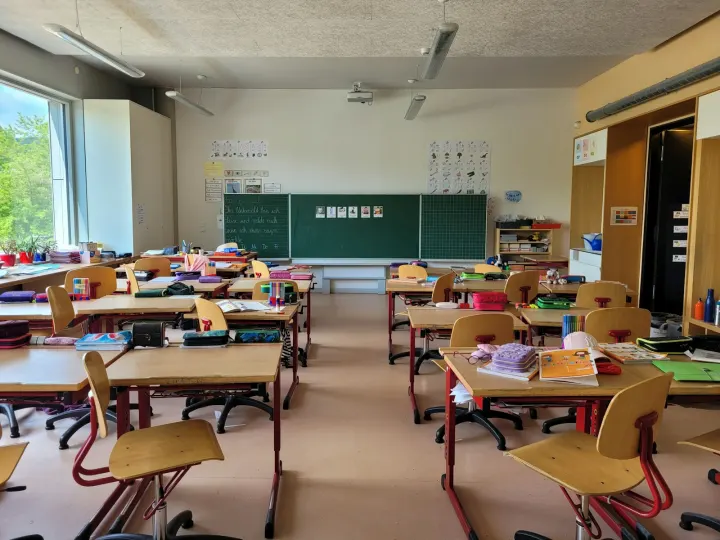
Nursery space rules in England stay as they are after outdoor space plan is dropped
The Department for Education has decided not to let childcare providers count free-flow outdoor space towards the minimum floor space per child, after a consultation that split almost evenly.
Nurseries, pre-schools and childminders in England will not be allowed to count outdoor space towards the minimum amount of room they must give each child indoors. The Department for Education confirmed on Thursday that it has dropped the idea, which it consulted on last year, and will keep the current rules, with the position under review.
That means the indoor minimums in the Early Years Foundation Stage frameworks stay as they are:
- 3.5 square metres per child for children under 2
- 2.5 square metres per child for 2-year-olds
- 2.3 square metres per child for children aged 3 to 5
The figures are based on the usable area of rooms the children use. Storage, corridors and other thoroughfares, staff areas, cloakrooms, utility rooms, kitchens and toilets do not count, although childminders are asked to consider which parts of their kitchen can be used safely.
Two options
The department had put forward two options. One was to include free-flow outdoor space in the space calculation with no limit. The other, which was its preferred option, was to include it with a cap on numbers to avoid overcrowding. Settings would still have had to meet staff-to-child ratios. The aim was to help providers create more places for the expanded funded childcare offer for working parents, after providers had named physical space as a barrier. In pulse surveys published in November 2024, lack of physical capacity was the most common reason providers gave for having a waiting list, cited by 55% overall.
The consultation ran for eight weeks from 12 May to 11 July 2025 and drew 1,243 responses, about 80% of them from early years providers.
A split response
The department called the responses finely balanced. Of those who answered the question on keeping the current rules, 59% wanted no change. At the same time, 55% backed the capped option, and among people who answered both questions and backed it, 46% also said the current rules should stay.
Respondents who described the risks of a capped change mentioned overcrowding most often, particularly indoors when bad weather makes outdoor areas unusable. Others raised inadequate shelter, higher heating costs, noise and staff burnout. Many opponents cited safety and quality. The department said it was also concerned that safeguards might be hard to apply consistently, and that with the sector already absorbing the expanded entitlements, now was not the right time for changes.
Supporters had pointed to extra capacity and shorter waiting lists, and to the developmental benefits of outdoor play. On the size of any cap, a 10% cap was the most popular choice among those who answered, at 35%.
Other routes to more places
The response points instead to other measures the department is relying on to increase places. It expects to spend more than £9.5 billion on early years entitlements in 2026-27. Alongside a £400 million capital programme for school-based nurseries, it is already providing £82 million to more than 600 primary and maintained nursery schools, which it says will create more than 11,000 nursery places by September 2027. Its workforce measures include piloting £1,000 recruitment incentives.